
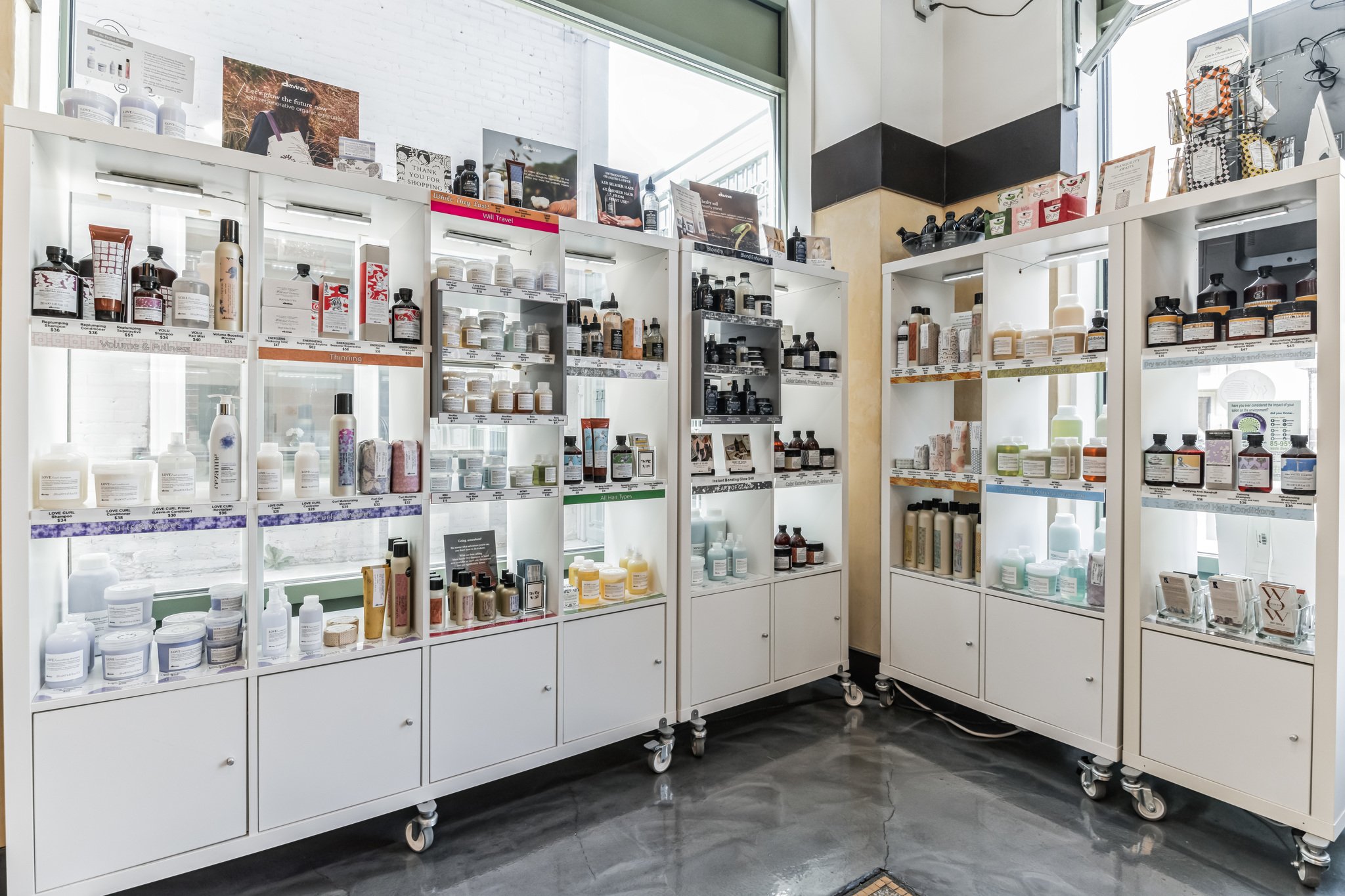
You've been thinking about it for a while — maybe after your last wash left your hair feeling like straw, or after your colorist mentioned your ends were getting worse between visits. Today you searched for it. Professional shampoo & conditioner in Ann Arbor. Not because you want to spend more money, but because what you've been using clearly isn't working. Pura Vida is where that frustration ends. The stylists here don't guess at what your hair needs — they assess it, address it, and send you home knowing exactly why your hair looks and feels different. If you're done cycling through drugstore products that promise everything and deliver nothing, this is the appointment that changes that.
Why Professional Shampoo and Conditioner Outperforms Your At-Home Routine
Most people in Ann Arbor grab a bottle off the drugstore shelf and call it a day. But professional shampoo & conditioner works differently — and once you understand why, it's hard to go back.
Retail products are made for the widest possible audience. That means they're formulated to work "okay" for most hair types. Professional products are built for specific hair needs. Higher concentrations of active ingredients. Less product, more results, and less buildup over time.
Here's a simple way to think about it. Retail shampoos often contain sulfates that strip your scalp of natural oils, which causes your scalp to overproduce oil to compensate. You wash more. Your hair gets drier. It's a cycle that keeps you buying product without solving anything. Professional formulas break that cycle by cleansing without stripping.
Conditioners work the same way. Drugstore conditioners coat the hair shaft with silicones, giving you the feeling of soft, smooth hair — but it's temporary. It also blocks moisture from actually entering the hair. Over weeks and months, your hair gets drier underneath while feeling slick on the outside. Professional conditioners use ingredients that penetrate the cortex. They repair from the inside, not just coat the outside.
If you live near the Old West Side or anywhere in Ann Arbor with older plumbing, hard water is a real factor. It leaves mineral deposits on your hair and scalp — deposits that block moisture, dull your color, and make your hair feel stiff. Many professional shampoos are formulated to chelate, meaning they bind to and remove those minerals. A standard grocery store shampoo won't do that.
Color-treated hair is another area where professional products pull ahead. The wrong shampoo can lift color molecules from the hair shaft every single wash. Color-safe professional shampoos maintain a pH level that keeps the cuticle closed, so your color lasts longer between appointments. You spend less time and money maintaining it.
The same logic applies to keratin-treated or chemically processed hair. Those services change the structure of your hair. Using the wrong products afterward can undo weeks of work in just a few washes. A professional recommends products that protect and extend what was done in the chair.
Scalp health matters too. Your scalp is skin — with its own microbiome, oil production, and sensitivity level. Sulfates, artificial fragrances, and certain preservatives found in retail products can irritate the scalp, cause flaking, or trigger sensitivity over time. Professional lines often exclude these ingredients entirely or use gentler alternatives. The growing consumer interest in cleaner formulations reflects a broader shift toward products that actually support scalp health rather than compromise it.
A lot of clients we see in Ann Arbor come in with hair that looks dull, feels rough, or breaks easily. They're frustrated because they've been using products marketed as "moisturizing" or "strengthening." The problem isn't their hair. It's that the products they're using aren't doing what the label suggests. Switch to a professional routine, and the difference shows up within two to three washes.
This isn't about spending more money. It's about spending it on something that actually works. A smaller amount of concentrated professional shampoo often goes further than a full bottle of retail product. You use less per wash. The bottle lasts longer. And your hair actually responds to it. Not sure which formula is right for your hair type? We can walk you through it in a free consultation.
The bottom line: professional products are built around hair science. Retail products are built around marketing. If your current routine isn't giving you the results you want, that's worth paying attention to.
How to Know Your Hair Is Ready for a Professional Treatment
Your hair sends signals. When it needs more than your regular routine can offer, it tells you — if you know what to look for. In Ann Arbor, the seasons push hair hard, with dry winters, humid summers, and everything in between. Knowing when to book a professional shampoo & conditioner service can save your hair before damage gets serious.
The most obvious sign is dryness that won't quit. You moisturize at home, but your hair still feels rough by midday. That's your hair telling you the moisture isn't reaching the cortex — the inner layer where real hydration lives. Home products sit on the surface. Professional treatments get deeper.
Breakage is another clear signal. Run your fingers through your hair after a shower. If you're pulling out more strands than usual, your hair shaft is weak. Weak hair breaks before it can grow. A professional conditioning treatment can help rebuild that strength from the inside out.
Look at your ends closely. Split ends that travel up the shaft mean damage has moved past the tip — the hair looks frayed, dull, or uneven in texture. This kind of damage spreads if you leave it alone. A professional treatment paired with a trim stops it from climbing higher.
Color-treated hair in neighborhoods like Burns Park or Kerrytown often shows stress faster than natural hair. Chemical processes strip the hair's natural protein bonds. After coloring, bleaching, or highlighting, your hair loses elasticity. Test this yourself: wet a single strand and stretch it gently. Healthy hair stretches slightly and bounces back. If it snaps right away or stretches too far without returning, your hair needs protein and moisture support that a professional formula can deliver.
Frizz that you can't tame is more than a styling problem. When the outer layer of your hair — the cuticle — is raised and rough, humidity gets in easily. That's what causes frizz. Flat irons and serums mask the problem temporarily. A professional conditioning service smooths the cuticle down so your hair can actually hold a style. If you're unsure whether what you're experiencing is normal seasonal frizz or something that needs attention, a stylist can tell you right away — no commitment required.
Scalp health matters just as much as the strands themselves. Itchy, tight, or flaky — those are signs the skin underneath is out of balance. A professional shampoo service uses formulas designed to reset that balance without stripping your natural oils. Over-washing with harsh drugstore shampoos can make scalp issues worse over time.
Think about your last few months of hair history. Daily heat styling? Chlorinated pools? Long hours in the sun? All of these activities pull moisture and protein out of your hair faster than normal. If two or more of these apply to you, your hair is almost certainly ready for a professional treatment — even if it doesn't look severely damaged yet. Prevention is easier than repair.
Pay attention to how your hair feels when it's dry. Healthy hair feels smooth, slightly flexible, and carries a natural shine. Stiff, brittle, or flat and lifeless right after washing? That's a sign the cuticle is damaged and the hair shaft is depleted. A professional service restores what your everyday routine can't replace on its own.
You don't have to wait until your hair is visibly broken to get help. The best time to book is when you notice the early signs — dryness, dullness, or that first hint of frizz that wasn't there before. Catching it early means less work and better results.
What to Expect During Your Shampoo and Conditioning Visit at Pura Vida
Walking into Pura Vida for a professional shampoo & conditioner service in Ann Arbor is a different experience than a quick rinse at home. Every step is intentional. From the moment you sit down at the shampoo bowl, nothing is random. Here is exactly what happens during your visit so you know what to expect before you arrive.
Your stylist starts with a quick scalp and hair assessment. They look at your scalp condition, hair texture, and any buildup you might have. Takes about two minutes. It tells them which products will actually work for your hair — not just the ones that smell nice. If you have hard water buildup from Ann Arbor's municipal water supply, they will spot that right away and adjust the treatment plan.
Next comes the shampoo phase. Your stylist works in sections, not just a general scrub. They use controlled water pressure and temperature to open the hair cuticle slightly, which helps the cleanser reach the scalp without stripping the mid-lengths or ends. Most clients need one to two rounds of shampoo depending on product buildup or oiliness. If you use a lot of dry shampoo or styling spray between appointments, expect a second pass.
After the shampoo rinse, the conditioning treatment goes on while your hair is still damp — this is when the cuticle is most receptive. Your stylist applies conditioner from mid-shaft to ends, avoiding the scalp area unless you have a specific scalp treatment booked. They use a wide-tooth comb to distribute the product evenly through each section. For clients in areas like Kerrytown or the Old West Side who deal with seasonal dryness, especially during Michigan winters, this step makes a visible difference in manageability.
Processing time depends on your hair type. Fine hair typically processes in three to five minutes. Thick, coarse, or color-treated hair may sit under a warm steamer for ten to fifteen minutes. The heat helps the conditioning agents bond to the hair shaft rather than just coating the surface. Your stylist checks in with you during this time — they explain what is happening and why. You are not just left sitting.
The rinse is done with cool water. Not a small detail. Cool water closes the cuticle back down, which locks in moisture and adds shine. A lot of at-home conditioning routines skip this step because cold water is uncomfortable. At Pura Vida, it is built into the process every time.
After the rinse, your stylist applies a leave-in product if your hair needs it. Not automatically — it depends on your hair's porosity and what you have booked for the rest of your appointment. If you are getting a blowout or cut after, the leave-in choice matters for how your hair will behave under heat or scissors.
Before you leave the shampoo bowl, your stylist gives you a brief rundown of what they observed. They might note that your scalp is showing signs of dryness near the crown, or that your ends are more porous than your roots. This is not a sales pitch. It is information you can use at home between visits. Many Ann Arbor clients find this five-minute conversation the most useful part of the appointment — you leave knowing your hair better than when you walked in. Pura Vida's stylists are licensed professionals with years of experience reading hair conditions that most people overlook.
The whole shampoo and conditioning service typically runs thirty to forty-five minutes on its own. If it is part of a larger appointment, it is built into the flow so nothing feels rushed. You are in a chair, not on a clock.
Ready to book your professional shampoo & conditioner service in Ann Arbor? Call Pura Vida directly or schedule online to claim your appointment. Your stylist will confirm your booking and walk you through what to expect when you arrive. The chair is ready when you are.