
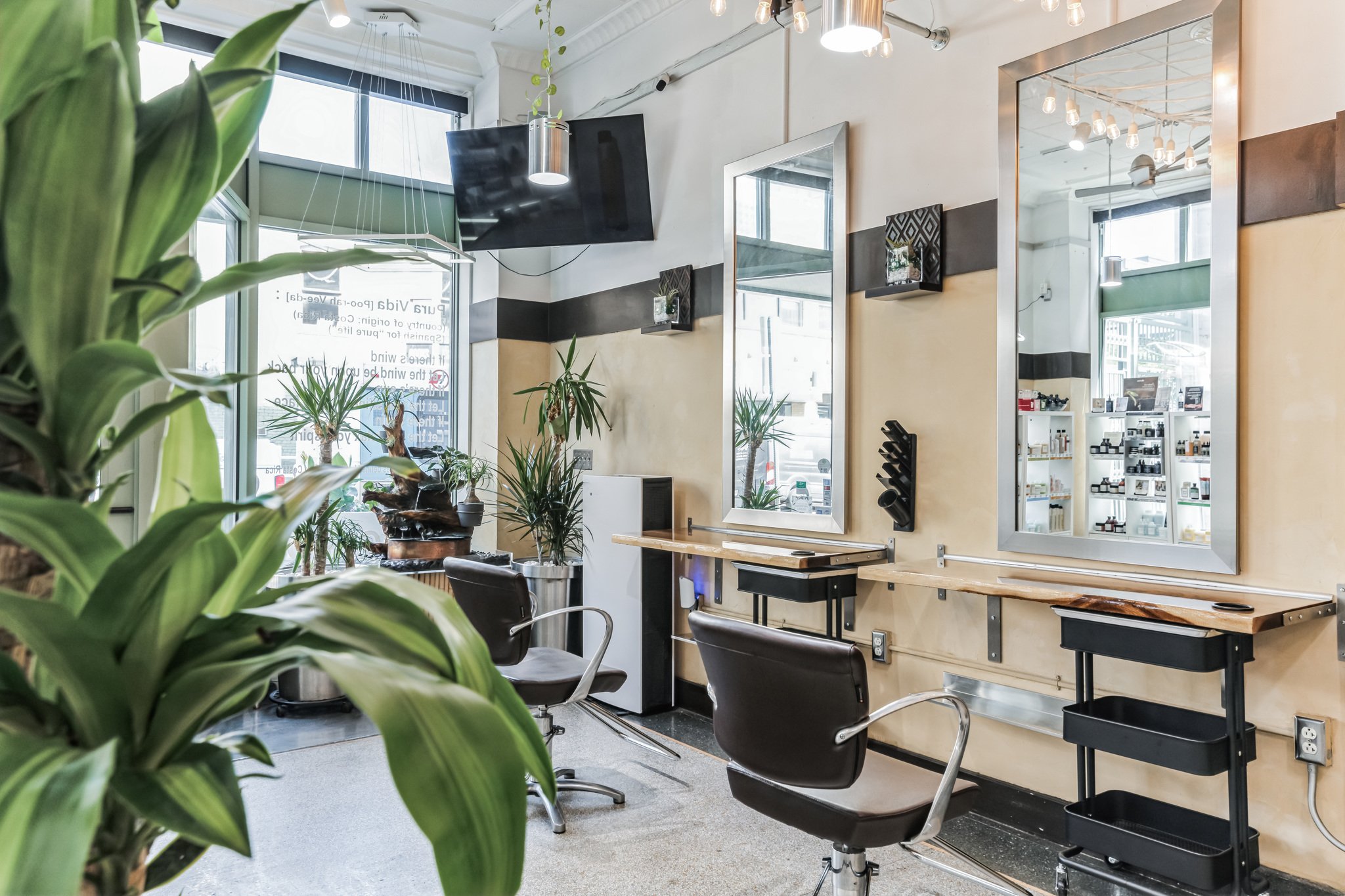
You've been staring at extension swatches for twenty minutes and nothing looks quite right. Maybe you've tried extensions before and they never truly blended — always a little off in sunlight, always slightly visible when your hair moved. That's not bad luck. That's what happens when Extension color matching is treated like a guessing game instead of a skill. In Ann Arbor, where you're outside on the Diag, at the Farmers Market, or on the Huron River trail — your hair gets seen in real light, constantly. You need a match that holds up out there, not just under a salon's flattering bulbs. At Pura Vida Color Studio Hair Salon, we don't guess. We assess your hair's undertones, porosity, texture, and color history before a single extension is chosen. That's why our clients stop noticing their extensions — and start just loving their hair.
Why Extension Color Matching Is More Complex Than Picking a Shade
Most people think extension color matching means finding a swatch that looks close enough. It's not that simple. Your natural hair has depth, dimension, and movement that a single color cannot capture. Getting extensions to blend invisibly takes more than a good eye — it takes real technical knowledge.
Your hair is not one color. Even if you've never colored it, your strands carry multiple tones from root to tip. Roots are usually darker. The mid-lengths shift slightly, and the ends are often lighter from sun exposure and daily friction. A flat, single-tone extension weft placed next to that kind of hair will look like a patch. Ann Arbor clients who spend time outdoors — on the Huron River, at the Farmers Market, or just walking to class — often have more natural variation than they realize.
Porosity makes matching even harder. High-porosity hair absorbs color fast and releases it fast. Low-porosity hair resists color and can look duller under the same light. Extensions have their own porosity level depending on how they were processed. If your natural hair and your extensions absorb light differently, they will read as two separate colors even if they started as the same shade. This is one of the most common reasons clients come in saying their extensions "just don't look right." If that sounds familiar, a proper consultation can usually pinpoint exactly why.
Lighting changes everything. A color that looks perfect under salon lighting can look completely different in natural daylight — or under the warm overhead lights common in older homes near Kerrytown. A skilled colorist evaluates your hair in multiple lighting conditions before finalizing a match. Skipping this step is one of the fastest ways to end up with extensions that blend in the chair but stand out everywhere else.
Undertones are another layer of complexity most people overlook. Hair undertones fall into warm (gold, copper, red) or cool (ash, violet, blue) ranges. If your natural hair pulls warm and your extensions pull cool, the difference will show — especially when your hair moves. Sunlight amplifies undertone mismatches. Simply matching a hair color number on a chart isn't enough. Two strands can be the same level and still clash because their undertones pull in opposite directions.
Extension type also affects how color reads. Tape-ins, hand-tied wefts, and clip-ins each have different textures and light-reflection patterns. A hand-tied weft sits flush against the head and catches light differently than a tape-in panel. That difference changes how the color appears once installed. Matching color on a weft lying flat on a table is not the same as matching it once it's installed and moving with your hair.
Previous color history matters too. Highlights, balayage, toning services — your hair has a color story that extensions need to match. Not just the current result, but the way your color fades and shifts over time. Extensions do not fade the same way your natural hair does. Planning for that from the start prevents a mismatch from developing six weeks after your appointment.
All of this is why extension color matching in Ann Arbor requires a real consultation — not just a quick glance in the mirror. The more your stylist knows about your hair's history, texture, and how you spend your time, the better your match will hold up in real life.
How Pura Vida Color Studio Hair Salon Reads Your Hair Before Choosing Extensions
Before any extension goes near your hair, we take a close look at what you're working with. A proper assessment is the foundation of great extension color matching in Ann Arbor. Skip this step and you risk extensions that look mismatched, feel wrong, or damage your natural hair. Our colorists are licensed and have completed advanced extension training — so this process is thorough by design, not habit.
The assessment starts with your hair's current color. We look at your base tone, your mid-lengths, and your ends. Most people have at least two or three different shades running through their hair at any given time. That variation matters. Extensions need to blend with all of it — not just the color closest to your roots.
We also look at your undertones. Hair can read warm, cool, or neutral depending on the light. Natural sunlight tells us the most. We often step near the window or use a daylight lamp to see your true tones clearly — because a shade that looks like a perfect match under salon lighting can look completely off in the afternoon sun outside your Burns Park home.
Next, we check your hair's texture and density. Fine hair sits differently than coarse hair. Curly hair refracts light differently than straight hair. These factors change how a color reads once it's attached. An extension that looks like a match on a swatch card may look lighter or darker once it's blended into your specific texture. We account for this before we ever pull a color.
We also check your hair's health. Porous hair absorbs color differently than healthy hair. If your ends are dry or damaged — which is common after Michigan winters — they may appear lighter or more faded than your mid-lengths. Attaching extensions to compromised hair without addressing this first can lead to uneven blending and added stress on already-fragile strands. We flag this during the assessment so you know exactly where you stand.
Chemical history is part of the conversation too. We ask about past color treatments, relaxers, keratin services, and anything else you've had done. This tells us how your hair is likely to behave going forward. It also helps us predict how extensions will sit against your natural hair after your next color appointment. Extensions don't lift with bleach and don't absorb color the same way natural hair does. Understanding your history helps us plan for that.
We look at your growth pattern and part line. Where your hair naturally falls and how it parts affects which extension placement method will blend most seamlessly. A client in the Kerrytown area who parts her hair down the center needs a different placement strategy than someone who wears a deep side part. We map this out before recommending any method or color.
Finally, we talk about your lifestyle and goals. How often do you wash your hair? Do you use heat tools daily? Are you trying to add length, volume, or both? These answers shape our color selection as much as the physical assessment does. Extensions worn by someone who swims regularly will fade differently than those worn by someone who air-dries twice a week. We factor all of this in so the color we choose holds up in your real life — not just on the day you leave the salon.
The full assessment typically takes 20 to 30 minutes. It's not a formality. It's how we make sure the extensions we recommend actually work for your hair, your routine, and your look. Not sure what the process looks like for your specific hair? We're happy to walk you through it before you commit to anything.
How to Prepare Your Hair for an Extension Color Match Appointment
Getting ready for your extension color match appointment in Ann Arbor takes a little planning. The more prepared you are, the faster and more accurate your color match will be. A few simple steps before you arrive can make a real difference in how well your extensions blend.
Wash your hair the day before your appointment — not the morning of. Fresh-washed hair can look slightly different in color and texture than your everyday hair. Day-old hair shows your true base color more accurately. This gives your stylist the most honest picture of what they're working with.
Skip the dry shampoo, heavy oils, and styling products on appointment day. These products coat the hair shaft and change how light reflects off your strands. A stylist matching extensions to product-coated hair may choose a shade that looks off once the products are washed out. Come in with your hair as natural as possible.
Wear your hair down when you arrive. Ponytails, braids, and buns can leave creases and alter how your hair lays. Your stylist needs to see your natural part, your layers, and how your color moves from root to end. This is especially important if you have highlights, balayage, or any kind of dimensional color — extensions need to match the mid-lengths and ends, not just the roots. Your stylist needs to see the full picture.
If you color your hair at home, bring the box or write down the shade name and brand before your appointment. Home color formulas can be tricky to read on the hair alone. Knowing the exact product you used helps your stylist narrow down the right extension shade faster. This is a common situation we see with clients coming from neighborhoods like Burns Park and Kerrytown — many people do a quick box color between salon visits.
Bring reference photos if you have them. A photo of your hair on a bright day outside — in natural Michigan light — is the most useful. Indoor photos under warm or cool artificial lighting can shift how your color looks on screen. Outdoor photos taken in daylight show your true tone and give your stylist a reliable reference point.
Think about your lifestyle before you come in. Do you swim in chlorinated pools? Spend long hours outside in the sun? Use a lot of heat tools? All of these factors affect how your natural hair and your extensions will age together. Extensions that are matched perfectly on day one can start to look mismatched if your natural hair fades faster — or the other way around. Talking through your routine helps your stylist pick a shade and tone that will hold up over time, not just look great the first week.
If you recently had a chemical service — a relaxer, a keratin treatment, or a color correction — let your stylist know ahead of time. These services can change the porosity of your hair, which affects how color sits on the strand. According to research on how materials bond and interact at a molecular level, porosity plays a defining role in how any substance adheres and performs over time — and the same principle applies to how color deposits and holds on the hair shaft. Highly porous hair can look darker or ashier than low-porosity hair even at the same base level. Your stylist needs that information to choose extensions that will truly blend, not just match in the store lighting.
Come in with realistic expectations about the process. A precise extension color match is a skilled service. It may take a few minutes of careful comparison in different lighting before your stylist commits to a shade. That time is worth it. Rushing the color match is the number one reason extensions look obviously fake. Giving your stylist the time and information they need means you leave with extensions that look like they actually grew out of your head.
You've done the research. You know what a real color match takes. Now book the appointment that actually delivers it. Call Pura Vida Color Studio Hair Salon in Ann Arbor to schedule your extension color matching consultation — we'll walk through your hair's full history, assess your tones in real light, and choose a shade that holds up everywhere your life takes you. Call us at (734) 757-6210 or book online at [scheduling link]. Your consultation is the first step to extensions that disappear into your hair — exactly the way they should.